
What Is Thailand FDA (อย.)? Which Products Require Approval?
About TMA Group
TMA Group is a professional company focusing on local recruitment and corporate consulting in Thailand, dedicated to providing one-stop services including recruitment, financial management, tax disposal, legal consulting, personnel management, etc. for enterprises and individuals. If you need more advice on investment in Thailand, please feel free to contact us.
—— TMA GROUP ——
FDA-Related Questions
Does Your Product Require Thailand FDA (FDA Thailand / อย.) Approval?
When entering the Thai market, one of the most common questions is:
Does my product require Thailand FDA (อย.) approval?
In Thailand, products related to health and safety are generally subject to regulatory control.
Incorrect assessment may not only affect product sales and market entry, but could also result in regulatory violations.
Therefore, understanding the scope of Thailand FDA regulation is the first step toward compliant market entry.

TMA Consulting Management has been paying attention to the updating of information through newsletters for many years, but we do not assume any responsibility for the completeness, correctness or quality of the information provided. No information contained in this article can replace the personal consultation provided by a qualified lawyer. Therefore, we do not assume any liability for damages caused by the use or non-use of any information in this article (including any kind of incomplete or incorrect information that may exist), unless it is caused intentionally or by gross negligence.
Thailand Personal Income Tax Deduction Guide
What Are PND.50 and PND.51? A Guide to Thailand's Corporate Income Tax Returns
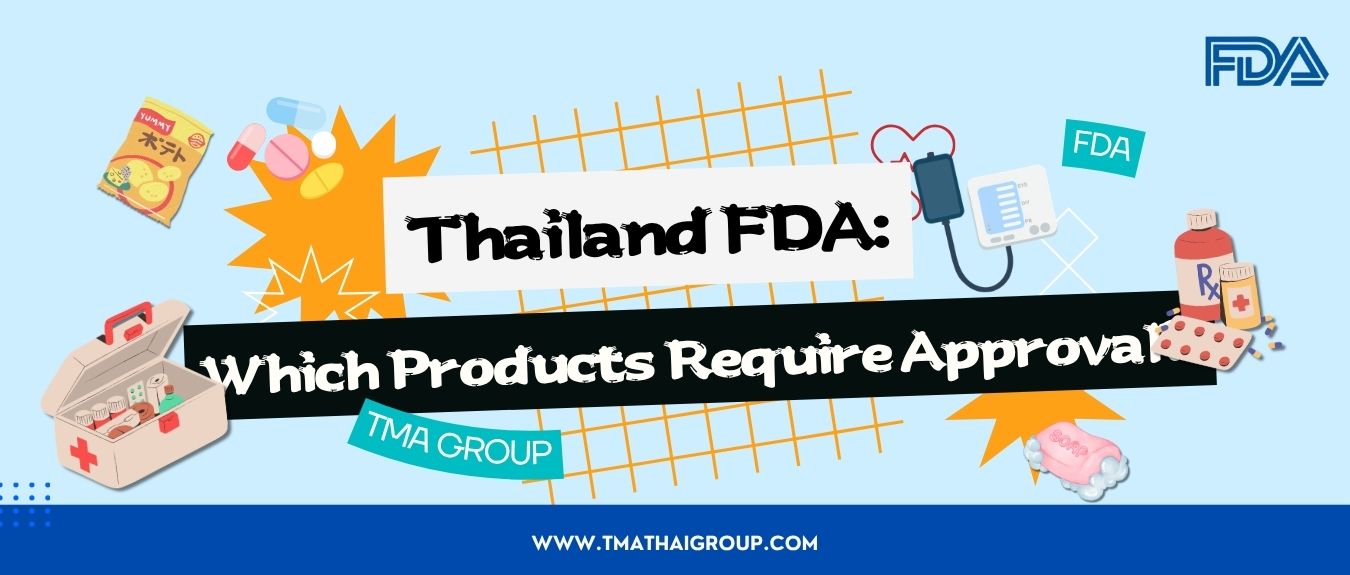
What Is Thailand FDA (อย.)? Which Products Require Approval?

Thailand Trademark Registration Costs Explained
What Is DLD?
What Is NBTC Certification? Which Products Must Obtain NBTC Approval Before Entering Thailand?
Thailand Machinery Registration
Why Is It Important to Confirm TISI Before Importing Products from China to Thailand?